Prafulla Acharya, PhD (c)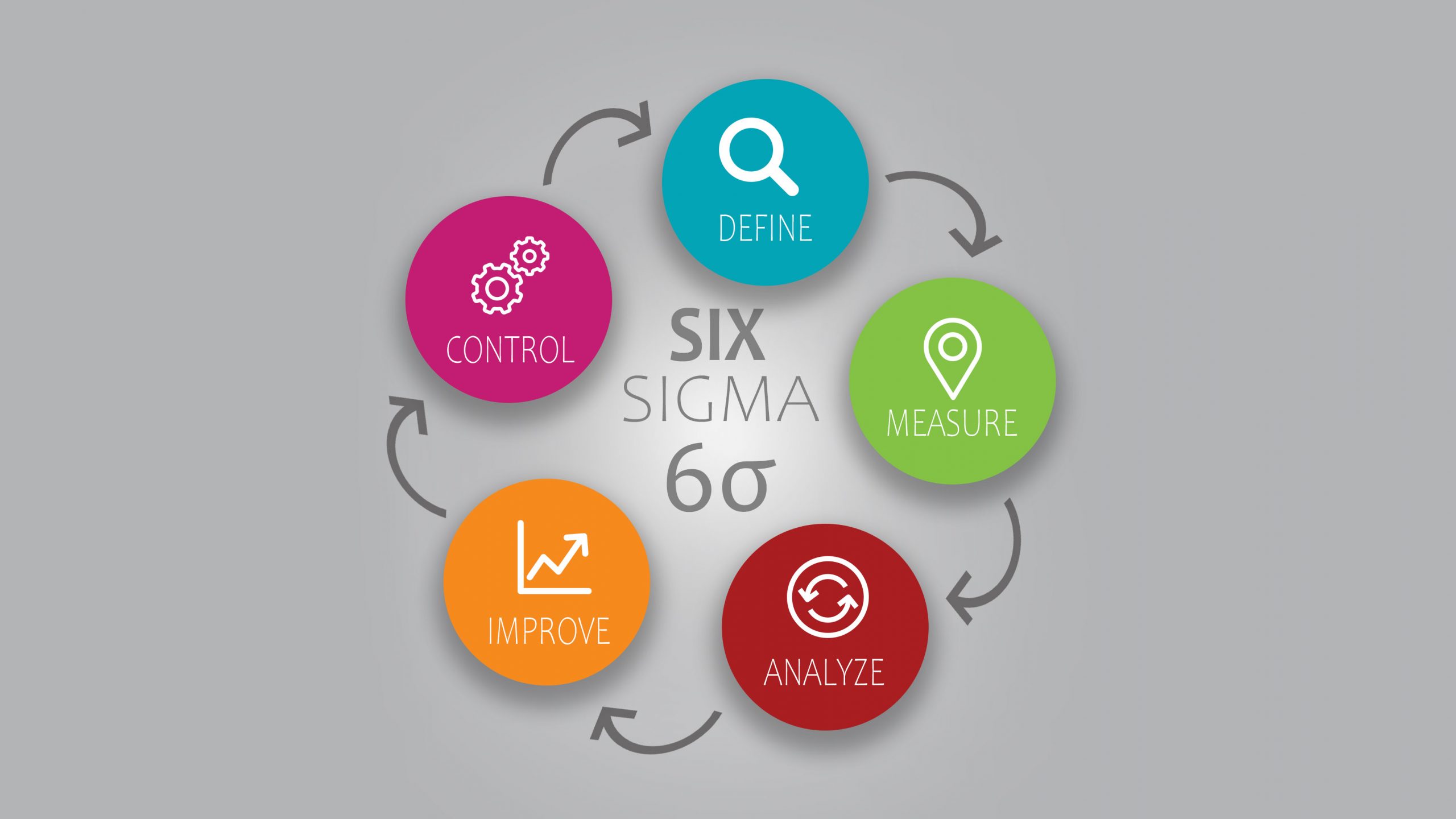
Six Sigma is about customer needs
It is a comprehensive and flexible system for achieving, sustaining and maximizing business success. Six Sigma is uniquely driven by close understanding of customer needs. It uses facts, data, and statistical analysis in a disciplined way, while giving attention to managing, improving, and reinventing business processes. A Six Sigma project is divided into five phases:
- define the problem,
- measure the current system,
- analyze the cause(s) of the problem,
- improve by implementing and verifying solutions,
- control the solution(s) and continuously improve.
The effective and efficient execution of processes is complicated by changes that occur both inside and outside the organization. Hence, every process must be monitored and controlled to be sure it continues to achieve its objectives.
Here is an example of a postal company that successfully monitored, controlled and benefited. Each this company's processing center processes in excess of 50 million letters. Unfortunately, 8.7 percent did not meet on-time delivery commitments. A Six Sigma* improvement project was initiated and late deliveries were reduced by 14.3 percent and $15,000 was saved annually.
Monitoring and control are central to achieving the purposes for which processes and projects were initially designed. To properly obtain the objectives we desire, we need to identify measures to track and, when needed, exercise control to bring results into an agreement with our plans.
Bill Smith is considered the ‘Father of Six Sigma’ as he developed it together with Motorola in early 80ties. Six Sigma became a popular management approach in 90ties with Jack Welch in General Electric. Since then, many companies around the world adopted Six Sigma as a way of doing their business.
Six Sigma, conscious leadership, and entrepreneurship
At first glance, Six Sigma — with its control charts, statistical thresholds, and defect rates — might seem worlds apart from the human-centred ideals of conscious leadership. But look closer, and the connection is striking.
Conscious leaders operate from a place of deep self-awareness and genuine accountability. They don't blame people when things go wrong — they examine systems. That instinct is pure Six Sigma. The methodology's core assumption is that most defects are not the fault of individuals, but of poorly designed processes. A conscious leader armed with Six Sigma doesn't ask "who failed?" — they ask "where did the system let people down?"
For entrepreneurs, this mindset is especially powerful. Early-stage businesses are essentially one big experiment: assumptions are tested, feedback loops are short, and every failure carries a lesson. Six Sigma gives entrepreneurs a disciplined language for that learning cycle — define what you're trying to achieve, measure what's actually happening, and improve relentlessly. It turns instinct into evidence.
There is also something deeply values-driven about the pursuit of zero defects. It says: the experience of our customer matters enough to obsess over. That kind of commitment — to quality, to people, to continuous growth — sits at the heart of both conscious leadership and entrepreneurial purpose.
Six Sigma sharpens the how. Conscious leadership clarifies the why. Together, they form the backbone of a business that performs with both precision and humanity.
Six Sigma, conscious leadership, and entrepreneurship are examined and taught at Alfred Ford School of Management as part of the Online MBA programme. Interested in joining us? Stay connected — follow us on facebook.
p-a-v1
Prof. Prafulla Acharya
As one of AFSM’s founding members, Prof. Acharya is an experienced leadership consultant whose career spans three continents. His exposure to diverse business and cultural environments across Europe, India, South America, and North America gives him a rare global outlook.
A PhD candidate at Bradford School of Management (UK), he holds an MS in Business Administration from Stockholm University, with additional advanced training from Cornell University, Aston University, and Stockholm University.
He has taught leadership, business administration, and research methods at institutions including Mälardalens University (Sweden), UPB University (Bolivia), and MKFC Stockholm, and has supervised numerous master’s theses.